Prawn curry done the Mozambican way means prawns simmered in a coconut sauce with gentle heat, served with rice, papadum and sambals. It is the coastal side of southern African cooking, and it is one of the most ordered seafood dishes at Villamoura in Downtown Dubai.
This guide explains where the style comes from, how it differs from other curries and how to decide between the curry and the grill.
What Mozambican Prawn Curry Is and Where It Comes From
Mozambique sits on the Indian Ocean, and its food carries centuries of trade along that coast. Portuguese settlers brought chillies and garlic, Indian traders brought spice routes and coconut, and local cooks folded both into the seafood their waters already held. In Maputo, the dish is everyday food, cooked at home and at beachside grills alike, which tells you how deep it runs.
The prawn curry is the dish where all of it meets. Prawns are cooked in a spiced coconut sauce that stays bright rather than heavy, with heat that builds gently instead of burning.
That balance is the signature. A Mozambican prawn curry should taste of the coast first and the spice second, which is exactly how our kitchen builds it.
The dish never needed reinventing, only respecting. Get the sauce right and the prawns do the rest.
Coconut-Based or Tomato-Based: Two Different Curries
Most curries in Dubai lean on a tomato and onion base, which gives a deeper, heavier sauce. The coastal style goes the other way.
A coconut prawn curry uses coconut milk as the body of the sauce. It cooks lighter, carries spice more softly, and lets the sweetness of the prawns come through instead of covering it.
Neither style is wrong, and both have their loyalists across the city. The tomato style suits diners raised on North Indian food, while the coconut style feels closer to Thai and coastal Indian cooking.
If you usually find prawn dishes drowned in heavy sauce, the coconut version is the one that will change your mind. It finishes clean, which matters at lunchtime as much as at dinner.
A quick test when ordering anywhere: ask what carries the sauce. If the answer is coconut milk, you are getting the coastal style this guide is about.
How It Is Served at Villamoura
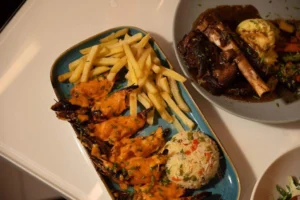
Our version arrives as ten prawns in the coconut Mozambican curry, with rice, a papadum and sambals on the side. A papadum is a thin crisp wafer for scooping, and sambals are the fresh chopped relishes of southern African tables, usually tomato, onion and chilli.
The build matters. Rice takes the sauce, the papadum adds crunch, and the sambals cut through the coconut with freshness between bites. Order it once, and you will understand why coastal tables never serve curry alone.
It is a complete plate rather than a curry and an afterthought. Ten prawns also make it one of the more generous seafood mains on the menu.
A small tip from the regulars: start with a prawn on its own, then build the full spoonful. Tasting the sauce before the sides join it shows you what the coconut is actually doing.
How Hot Is It, and Who Will Love It
The heat sits in the friendly middle. Warm enough to know it is a curry, gentle enough that the coconut keeps everything round and comfortable.
Coconut milk does the moderating naturally, softening chilli the way yoghurt does in other cuisines. That is why coastal curries rarely punish the way dry-spiced dishes can.
Guests who avoid fiery food finish this plate happily, and chilli lovers can ask for the sambals loaded hotter. That flexibility makes it a safe order for a mixed table, and it is why parents often share a few spoonfuls with older children without a second thought.
It suits anyone who loves prawns, anyone curious about African coastal cooking, and anyone who wants a warming plate that will not flatten the afternoon. First-time guests who cannot decide between familiar and new usually land here, since the format is familiar and the flavour is the discovery.
Where Mozambican Cooking Sits in Southern African Food
Southern African food is usually pictured as the braai, the open-flame grill culture that South Africa made famous. The coast tells the other half of the story.
Mozambican cooking is the seafood chapter, shaped by Portuguese and Indian Ocean influences, and it travelled inland to become part of how the whole region eats. Peri-peri itself came up through that same coastline before the world adopted it.
South African menus carry both traditions without contradiction. Flame for the land, coconut and spice for the sea, and a shared table for everything.
At Villamoura, the two halves share one kitchen. The flame-grill carries the braai tradition, and dishes like this curry and the Mozambican vegetable and chickpea curry carry the coast.
Curry or Grilled Prawns: How to Choose
Both start with the same prawns, so the choice is about the day. Choose the grilled prawns when you want char, smoke, and food you eat with your hands.
Choose the curry when you want a slower plate, a sauce worth every grain of rice and comfort over theatre. It is the better order on a cooler evening and the more generous one for a solo diner.
The unofficial third option is a shared table that orders both, splitting the char and the sauce down the middle. Nobody has ever regretted it, and most tables that try it once repeat the order on the next visit.
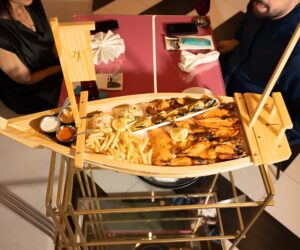
Explore the full catch at our best seafood restaurant in Dubai, or see how the prawns anchor the sharing boards on our seafood platters in Dubai. Then book a table at Villamoura and let the coast decide for you.
Frequently Asked Questions
It is the coastal curry style of Mozambique, built on coconut milk, garlic, and gentle chilli heat, a legacy of Portuguese settlement along the coast. Seafood versions, especially prawn, are the most famous.
The Mozambican style is mild to medium, with coconut softening the chilli. Ask for extra heat through the sambals if you want it hotter.
Sambals are fresh chopped side relishes served with southern African meals, typically tomato, onion and chilli. They add freshness and crunch between rich bites.
The prawn curry Dubai diners ask us about is served daily at our Downtown restaurant on Sheikh Zayed Road, inside the Sofitel Dubai Downtown. Book ahead for evenings and weekends.